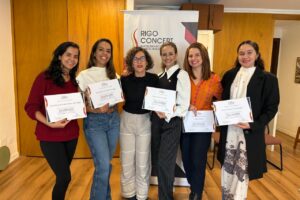
Level 2 with Amy Sbihli in Lexington, MA, USA
The Level 2 course held in Lexington, Massachusetts brought together a group of dedicated physiotherapists committed to advancing their clinical expertise in scoliosis management. Over several intensive days, participants engaged in both theoretical and practical learning experiences designed to strengthen their understanding of evidence-based conservative care.
The course was delivered following the educational Rigo Concept Barcelona Scoliosis Physical Therapy School principles, providing participants with a deeper understanding of modern approaches to Physiotherapy for Scoliosis. Throughout the program, attendees refined their clinical reasoning skills and enhanced their ability to evaluate complex spinal deformities.
Significant attention was given to Scoliosis diagnosis, including postural assessment, radiological interpretation, and classification strategies that support individualized treatment planning. Participants discussed different curve patterns, including Thoracic scoliosis and Lumbar scoliosis, and explored how these presentations influence corrective strategies and exercise selection.
Hands-on workshops focused on Physiotherapy exercises and Exercises for scoliosis, allowing participants to apply corrective principles through guided practice. These sessions emphasized three-dimensional correction and patient-specific adaptation, drawing from methods that are Based on Schroth method principles and further developed within the Rigo Concept framework.
The course also addressed the integration of exercise therapy with interdisciplinary management strategies that support optimal patient outcomes through collaboration between physiotherapists, orthotists, physicians, and families.
Additional discussions covered various Clinical case studies encouraged critical thinking regarding prognosis, treatment progression, and long-term management goals.
A key theme throughout the course was the importance of non-surgical approach to Scoliosis treatment, highlighting evidence-based approaches for conservative management. Participants reviewed current recommendations for non-surgical scoliosis treatment and examined how individualized rehabilitation programs can improve function, posture, and quality of life.
The small class size encouraged meaningful discussion, peer learning, and individualized feedback. Participants actively exchanged clinical experiences and worked collaboratively to solve case-based challenges.
By the conclusion of the course, all participants demonstrated increased confidence in assessment, exercise prescription, and clinical decision-making. The enthusiasm, professionalism, and engagement of the group contributed to an outstanding learning environment.
The Lexington Level 2 course successfully strengthened participants’ competencies in contemporary scoliosis care and reinforced the value of ongoing professional development in specialized conservative treatment.


Author: Rigo Concept - BSPTS
You may also like

Level 1 with Yumin Ding in Kaohsiung, Taiwan
Level 1 with Andreea Virban in Craiova, Romania